Understanding Reverse Osmosis: What Happens Between Your Tap and Your Glass?
There’s a small moment most of us take for granted: filling a glass of water, taking a sip, and getting on with the day. But if your tap water has an odd taste, leaves deposits in the kettle, or comes from a source you’re unsure about, you may start wondering whether a better treatment option is worth the effort.
Reverse osmosis is one technology that often comes up during that search. It can reduce many dissolved substances in drinking water, but it’s not a magic solution for every water problem. Understanding how it works, what it can remove, and what it requires after installation makes it easier to decide whether it belongs in your home.
What Makes Reverse Osmosis Different?
Ordinary filters often trap particles or use media that adsorb selected substances. Reverse osmosis works differently. It uses pressure to push water through a semipermeable membrane, allowing water molecules to pass while reducing many dissolved constituents.
The process behind reverse osmosis technology is based on separating water from a portion of the substances dissolved in it. Depending on the system’s design and performance, this may include certain salts, metals, and other specified contaminants. The exact results vary, so it’s important to check the manufacturer’s documentation and independent certification for the substances you want to reduce.
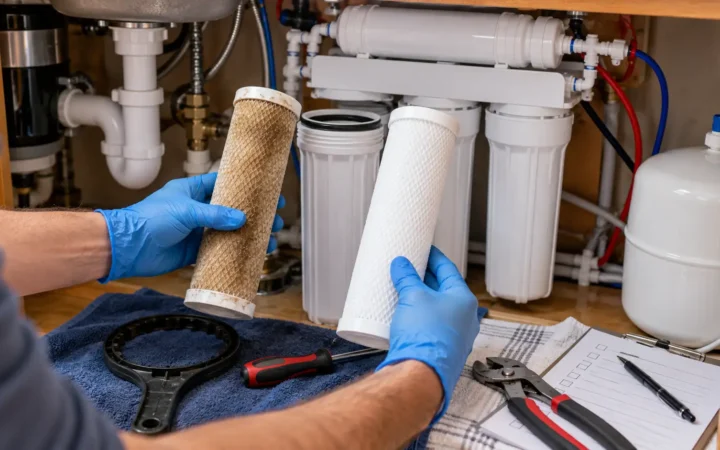
A typical under-sink unit includes several components. Water usually passes through preliminary filters before reaching the membrane, and some systems use a post-filter to improve taste. Many traditional models store treated water in a small tank, while tankless systems produce water on demand under suitable operating conditions.
The main advantage is targeted treatment for drinking and cooking water. Instead of treating every drop entering the house, you can focus on the water used most directly for consumption. For some households, that’s a practical balance between treatment performance and installation cost.
Why Pre-Filtration Matters
A reverse osmosis membrane is an important component, but it doesn’t work alone. Incoming water may contain sediment, chlorine, or other substances that can affect the membrane’s service life or the overall performance of the unit. That’s where pre-filtration comes in.
A sediment filter can capture particles such as sand and rust before they reach the membrane. A carbon prefilter may reduce chlorine and selected compounds, depending on its design. These stages help prepare the water for the membrane and can reduce the risk of premature damage.
The right arrangement depends on the source water and the equipment being installed. A home receiving treated municipal water may have different requirements from one using a private well. If the water has high sediment levels, iron, or other challenging characteristics, additional treatment may be needed before reverse osmosis can operate effectively.
It’s tempting to assume that more filter stages automatically mean better water. In reality, each stage should have a clear purpose. A well-designed system uses components that match the water conditions rather than adding equipment simply to make the product sound more advanced.
How the Membrane Does Its Job
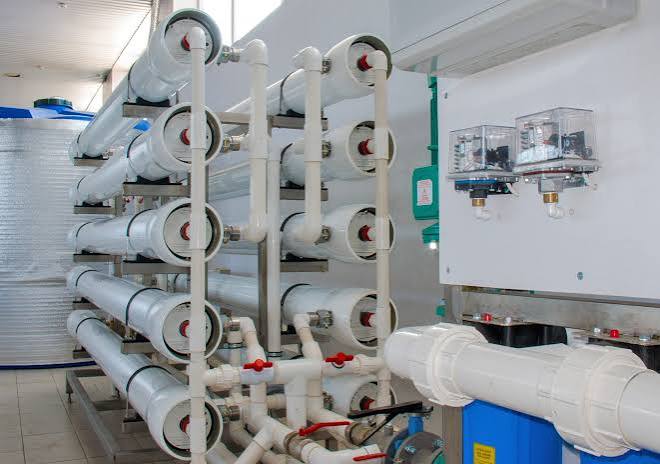
The membrane is the central part of a reverse osmosis unit. Under pressure, water passes through its very fine structure while many dissolved substances are held back and carried away in a separate wastewater stream. This is a form of membrane filtration, although reverse osmosis is more specific than ordinary particle filtering because it is designed to reduce many dissolved constituents.
Membrane performance depends on several factors, including pressure, water temperature, the chemistry of the incoming water, and the condition of the equipment. A membrane that performs well under one set of conditions may produce different results under another.
It’s also worth remembering that reverse osmosis does not necessarily remove every contaminant. Some substances may be reduced more effectively than others, and the system’s performance should be verified for the specific concern. If you’re worried about a particular chemical or health-related contaminant, choose a unit with appropriate performance data rather than relying on a general claim that the water will be “pure.”
Testing can help determine whether the system is doing what you expect. Depending on the concern, this may involve testing the incoming water, the treated water, or both. Follow the manufacturer’s recommendations and seek professional advice when results are difficult to interpret.
Is Reverse Osmosis Right for Every Home?
Not necessarily. If the main issue is hard water, a conventional reverse osmosis drinking-water unit may not be the most practical way to treat the entire house. Hardness is usually managed with a water softener or another method suited to that problem. Reverse osmosis can be used for drinking water, but it doesn’t replace every other type of treatment.
The same principle applies to taste and odor. If testing and the water-quality report indicate that the main concern is chlorine taste, a suitable activated carbon filter may be enough. Installing reverse osmosis without a clear reason could add cost and maintenance without delivering a meaningful benefit.
On the other hand, when testing identifies dissolved substances that a certified reverse osmosis system is designed to reduce, the technology may be a useful option. The decision should be based on water quality, household needs, and the performance of the particular model.
Consider Water Use, Space, and Running Costs
Reverse osmosis systems need more than an initial purchase budget. Traditional units send some water to the drain during production, although the amount varies considerably by design and operating conditions. They also require replacement filters and periodic membrane changes.
Before installation, check the available space beneath the sink, the location of plumbing connections, and whether the system requires a storage tank. Think about your household’s routine, too. A small family that fills a few glasses each day may have different needs from a larger household that regularly fills bottles and uses treated water for cooking.
Flow rate is another consideration. Some systems store treated water for use when needed, while others rely on direct production. If demand is high, make sure the selected model can supply enough water without creating an inconvenience.
Ask about the cost and availability of replacement components. A system may appear affordable initially, but expensive or difficult-to-find filters can make ownership less appealing over time.
Keep the System Working Properly
Maintenance is essential. Prefilters need replacement according to the manufacturer’s schedule, and the membrane has a limited service life. Storage tanks, tubing, and other components should also be inspected or sanitised as directed.
Keep track of installation dates and filter changes. If the water’s taste changes, production slows noticeably, or the system begins leaking, investigate rather than assuming everything is working normally. A qualified technician can help identify whether the issue involves the membrane, pressure, filters, or another component.
Make the Decision With Clear Information
Reverse osmosis can be a useful way to improve drinking-water quality, but its value depends on choosing the right system for the right reason. Start with testing, review the contaminants you want to reduce, and check verified performance claims before purchasing equipment.
A sensible treatment decision isn’t about having the most complicated setup beneath the sink. It’s about understanding your water, knowing what the technology can realistically achieve, and being prepared to maintain it.
When those pieces come together, reverse osmosis becomes easier to evaluate. You can weigh its benefits and trade-offs with confidence and choose an approach that fits your home, your budget, and the way you use water every day.