Keeping Your Water Treatment System Reliable with Simple, Regular Care
Most people expect clean, dependable water whenever they turn on a tap. It’s easy to take that convenience for granted until the water starts leaving stains on the sink, the shower pressure drops, or a treatment system stops working as expected. Often, the problem doesn’t happen overnight. Small maintenance tasks get postponed, supplies run low, and a minor issue gradually turns into an expensive repair.
The good news is that looking after a water treatment system doesn’t have to be complicated. A little attention throughout the year can help maintain performance, protect equipment, and reduce unexpected interruptions. Whether you rely on a water softener, a filtration unit, or a more advanced treatment setup, understanding the basics makes a real difference.
Why Regular Water System Care Matters
Water treatment equipment works behind the scenes, but it handles a lot. Depending on the system, water may pass through filters, resin tanks, valves, membranes, and other components before reaching your faucet. Each part has a particular job, and performance can gradually decline when something becomes clogged, worn, or incorrectly adjusted.
For example, a sediment filter catches particles that would otherwise move farther into the plumbing. Over time, those particles accumulate, making it harder for water to pass through. A softener manages hardness minerals, while a reverse osmosis system uses a specialized membrane to reduce many dissolved substances. None of these components lasts forever.
Routine care helps identify developing problems before they affect daily use. It can also make it easier to spot changes in water quality. If the water suddenly tastes different or mineral deposits return, the treatment system may need attention, although plumbing issues or changes in the source water could also be responsible.
Maintenance isn’t simply about preventing breakdowns. It’s about knowing that the equipment is doing the job it was installed to do.
Keeping Essential Supplies Available
Some water treatment systems need consumable supplies to operate correctly. Water softeners, for instance, commonly use salt during the regeneration process. When the salt supply runs low, the system may not regenerate as intended, and hard water can begin passing through the plumbing again.
For busy households, arranging a salt delivery service can make this task easier to manage. Instead of waiting until the brine tank is nearly empty, homeowners can plan deliveries around their normal usage. This can be particularly useful for larger families, properties with several bathrooms, or locations where carrying heavy bags of salt is inconvenient.
It’s still worth checking the brine tank occasionally. Delivery schedules are helpful, but salt consumption varies with water hardness, household demand, and the softener’s settings. Simply adding more salt without checking the tank isn’t always the best approach.
Use salt recommended by the equipment manufacturer, and avoid filling the tank beyond its specified level. If a hard crust or solid mass develops inside, the system may have a salt bridge or another issue that prevents proper operation. Follow the manufacturer’s instructions before attempting to clear it.
A few minutes spent checking supplies can save a frustrating evening of wondering why the shower suddenly feels different.
The Value of Preventing Problems Early
It’s tempting to wait until something breaks before calling a technician. After all, if water is flowing and the equipment appears to be working, why spend time checking it? The trouble is that some problems develop quietly. A small leak, an aging seal, or a poorly performing valve may go unnoticed until the damage becomes more serious.
A sensible preventative maintenance routine helps catch these issues early. Depending on the equipment, it may include inspecting pipes and connections, checking for unusual noises, reviewing system alerts, and confirming that pressure and flow remain within the expected range.
Water leaks deserve particular attention. Even a slow drip around a filter housing or connection can waste water and damage nearby cabinets, flooring, or stored items. If you notice moisture, turn off the appropriate supply when necessary and follow the manufacturer’s safety guidance. Don’t dismantle pressurized equipment unless you’re qualified to do so.
Professional inspections can also be worthwhile, especially for complex systems or equipment used in commercial settings. A trained technician can examine components that aren’t easily accessible and identify wear that may not be obvious to the owner.
The right schedule depends on the type of system, water conditions, and how heavily the equipment is used. Rather than treating every installation the same, build a maintenance plan around its actual requirements.
Filter Replacement Shouldn’t Be an Afterthought
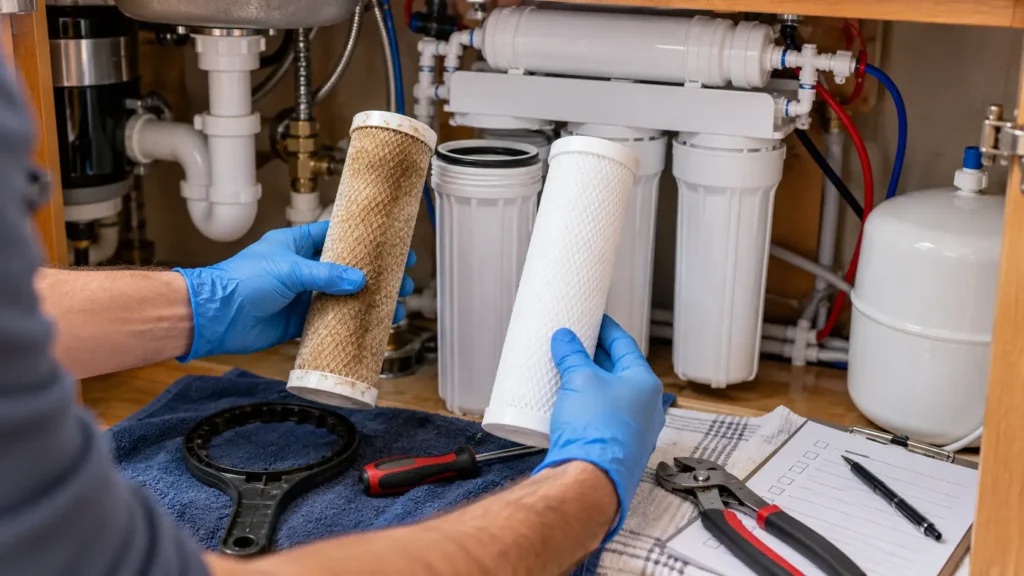
Filters are among the most frequently overlooked parts of a treatment system. Because they sit inside a housing or cabinet, it’s easy to forget about them until water flow slows or an unpleasant taste returns.
Regular filter changes help keep filtration equipment working within its intended performance range. However, the correct interval depends on the filter type, water quality, and total water consumption. A household using large quantities of water may need replacements sooner than a small household with lighter demand.
Start by checking the manufacturer’s recommended replacement schedule. Some systems include indicators or monitoring features, but these should be understood in context. An indicator may track time or estimated usage rather than directly measuring every aspect of filter performance.
When replacing a cartridge, use the correct model and follow the installation instructions. Make sure the housing is seated properly, connections are secure, and any required flushing procedure is completed before using the water. A poorly installed cartridge can lead to leaks or reduced performance.
It’s also important to distinguish between filtration and disinfection. A standard sediment or carbon filter does not necessarily make microbiologically unsafe water safe to drink. If you’re using well water, follow appropriate testing recommendations and select treatment equipment suited to the contaminants identified.
Keeping a simple record of replacement dates makes the process easier. Set a calendar reminder, write the date on the housing, or use a maintenance log. Whatever method you choose, consistency is more useful than relying on memory.
Pay Attention to Changes in Water Quality
Your water can offer clues when a system needs attention. White scale around faucets may indicate that hard water is returning. A sudden change in taste or odor could suggest a filter issue, although the source water or plumbing may also be involved. Reduced flow might point to a clogged cartridge, a valve problem, or an unrelated plumbing restriction.
These signs are useful, but they aren’t a substitute for testing. Water that looks clear can still contain contaminants that cannot be seen, tasted, or smelled. If you notice a significant or persistent change, investigate it rather than assuming the treatment system will correct it automatically.
Private well owners should be especially attentive to regular water testing because groundwater conditions can change. Testing for bacteria and other locally relevant contaminants helps determine whether additional treatment is needed. If you suspect the water may be unsafe, use a suitable alternative for drinking and cooking until you receive appropriate guidance.
Make Maintenance Part of the Routine
The easiest maintenance plan is one you can realistically follow. You don’t need to inspect every component every day. Instead, divide the work into manageable tasks: check supplies periodically, look for leaks, track filter replacement dates, and arrange professional servicing when recommended.
It helps to keep the system’s manual, installation details, and service records in one place. If a problem develops, that information can help a technician understand the equipment’s history and avoid unnecessary guesswork.
For businesses, a written maintenance schedule is particularly valuable. When several people share responsibility for equipment, clear records reduce the chance that a task will be missed or duplicated.
Ultimately, dependable water treatment comes down to a combination of suitable equipment, good water-quality information, and regular care. Small checks may seem unimportant when everything is running smoothly, but they’re often what keep it that way.
Clean, reliable water shouldn’t require constant worry. With the right supplies, timely servicing, and a little consistency, you can help your treatment system perform as intended and spend less time dealing with preventable problems.